Which Experts Transformed SEO Industry? Key Pioneers and Their Contributions
Quick Answer
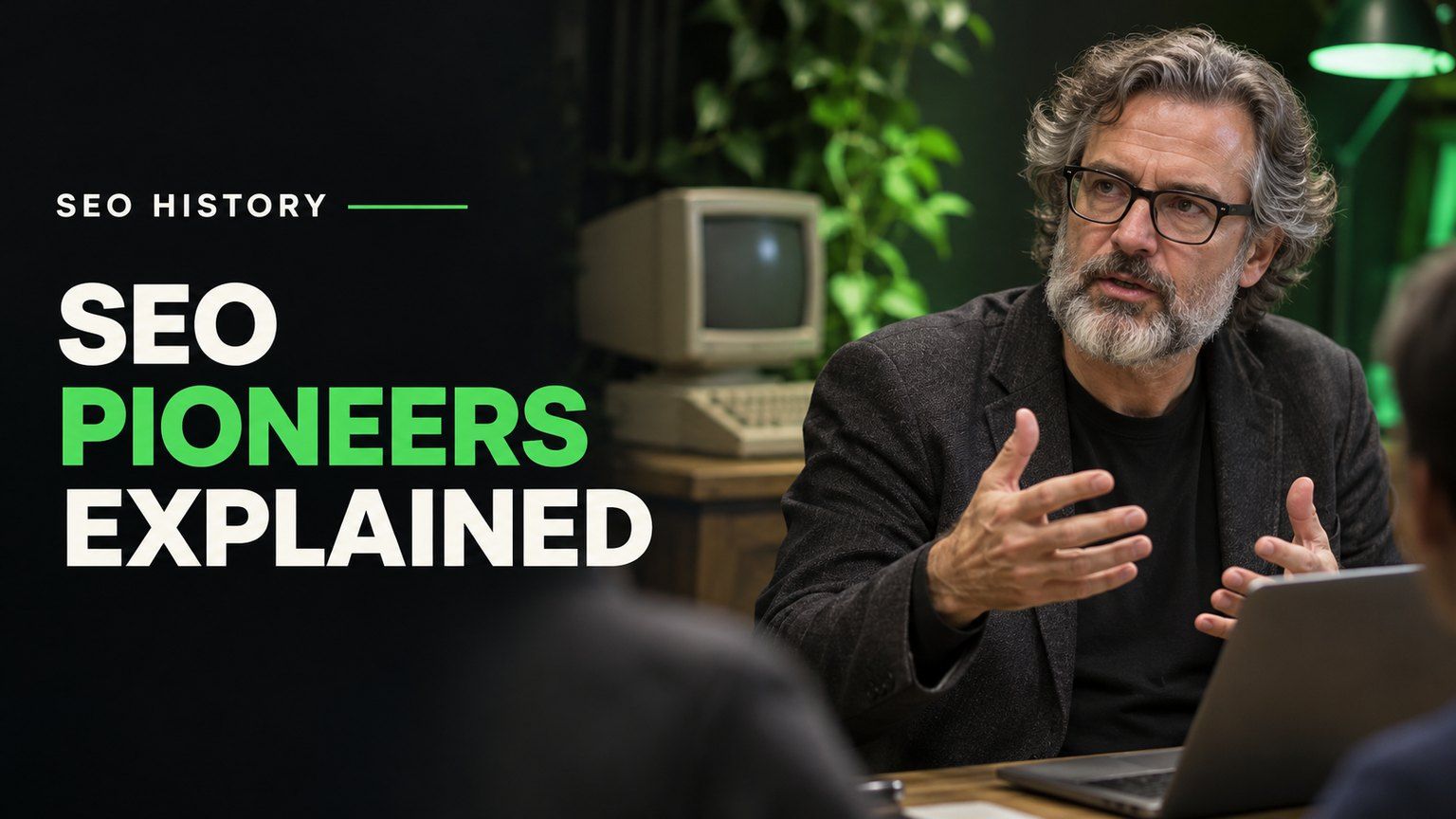
Readers asking “which experts transformed seo industry” are looking for the people who shaped search engine optimization and the contributions that made the profession what it is today. Bruce Clay helped establish SEO as a profession, Danny Sullivan and Barry Schwartz made search developments easier to understand, Jill Whalen promoted sustainable content practices, Bill Slawski explained search-engine patents, and Matt Cutts communicated search-quality issues. Their combined contributions helped create the modern SEO industry.
Key Takeaways
- SEO developed through contributions from multiple generations, not one inventor.
- Bruce Clay helped establish structured SEO services and professional education.
- Danny Sullivan and Barry Schwartz made search-industry developments easier to follow.
- Jill Whalen championed useful content and sustainable optimization.
- Bill Slawski helped professionals understand complex search-engine patents.
- Matt Cutts communicated important search-quality and webspam issues.
- Communities, conferences and educational resources helped SEO develop into a global profession.
How SEO Became an Industry
Search engine optimization did not emerge as a fully developed profession overnight. It grew alongside search engines, websites and the increasing importance of being discoverable online.
During the early days of the web, website owners and marketers experimented with page titles, keywords, links and website structure to improve their visibility in search results. As search engines became more important to businesses, these activities developed into specialized professional services.
The terminology also has a complicated history. Several early practitioners have been associated with the emergence of the term search engine optimization around 1995–1997. Historical accounts identify Bruce Clay, John Audette, Bob Heyman, Leland Harden and Viktor Grant among the people connected with competing origin stories.
Rather than crediting one person as the undisputed inventor, it is more accurate to recognize that SEO terminology and professional practice developed through overlapping contributions.
Search Engine Land's historical account of SEO's origins examines these competing accounts and explains Danny Sullivan's later role in popularizing the term through industry journalism.
As search marketing expanded, professional publications, discussion forums, conferences and educational websites helped practitioners exchange knowledge. SEO gradually became a discipline involving technical optimization, content development, information architecture, link evaluation and search-quality analysis.
The Experts Who Helped Transform SEO
The following individuals represent different forms of influence. This is a historical selection based on documented contributions, not a scientifically measured ranking of the most influential SEO professionals.
1. Bruce Clay: Helping Establish SEO as a Profession
Bruce Clay is widely associated with the early professionalization of search engine optimization.
Clay began working on search visibility during the early development of commercial search engines. His work helped turn experimentation with search rankings into a more structured professional service.
One notable contribution was the Search Relationship Chart, which helped explain relationships between search engines, website elements and optimization practices. His educational work also helped professionals understand SEO as a discipline requiring planning, technical knowledge and ongoing improvement.
Clay is particularly relevant to the history of SEO because he helped establish a recognizable professional identity for people working in search optimization.
His legacy also includes an emphasis on ethical practices rather than relying exclusively on short-term ranking tricks.
Historical reference: Bruce Clay — SEO Pioneers.
2. Danny Sullivan: Making Search Developments Understandable
Danny Sullivan transformed the way SEO professionals learned about search engines.
Before the modern search-marketing news ecosystem developed, information about search-engine changes could be scattered across technical announcements, forums and individual discussions. Practitioners needed reliable ways to understand what was happening and what it meant for their websites.
Through Search Engine Watch and later Search Engine Land, Sullivan helped make search-industry developments accessible to a much wider audience.
His influence was not simply about publishing articles. Search journalism gave professionals a shared place to discuss changes, understand industry terminology and follow developments across different search platforms.
He also helped popularize the term SEO, making it more familiar to marketers, businesses and website owners.
His contribution demonstrates why independent reporting matters in a technically changing industry: professionals need accurate information before they can make sensible decisions.
Reference: Search Engine Land's history of SEO terminology.
3. John Audette, Bob Heyman and Leland Harden: Early SEO Terminology
John Audette, Bob Heyman and Leland Harden are among the individuals associated with the early history of the term search engine optimization.
Their significance lies in the development of the language used to describe a growing marketing discipline. As businesses began paying more attention to search visibility, practitioners needed a recognizable way to describe the work they were performing.
Historical accounts connect these individuals with competing explanations of how SEO terminology emerged during the mid-1990s.
It is important not to turn this shared historical association into an unsupported claim that one individual definitively invented SEO. The available historical evidence supports a more nuanced explanation involving overlapping early contributions.
Their inclusion also illustrates an important point: industries are shaped not only by people who develop new techniques but also by those who establish the language through which professionals understand and communicate their work.
Reference: The origins of SEO — Search Engine Land.
4. Jill Whalen: Promoting Useful Content and Sustainable SEO
Jill Whalen became an important voice for responsible, content-focused search optimization.
An ongoing challenge in SEO has been the temptation to prioritize short-term ranking tactics over the actual needs of website visitors. Whalen consistently advocated creating useful content, following ethical optimization practices and building long-term value rather than chasing every algorithm change.
Her influence extended beyond individual optimization recommendations. Through education and mentorship, she helped other professionals understand why sustainable SEO requires more than manipulating page elements.
This approach remains relevant because a technically optimized page still needs to answer the reader's question. Repeating keywords or building links without considering relevance and usefulness does not create a strong long-term content strategy.
Whalen's contribution represents an important development in SEO: a stronger professional emphasis on helping users rather than treating search rankings as the only objective.
Reference: Jill Whalen's SEO Legacy Still Shapes the Industry — Search Engine Journal.
5. Bill Slawski: Explaining Search-Engine Technology
Bill Slawski made complex search-engine research more accessible to SEO professionals.
Through his long-running publication, SEO by the Sea, Slawski examined search-related patents and explained technical concepts that many marketers would otherwise find difficult to interpret.
His research covered subjects including:
- PageRank and link analysis.
- TrustRank and search quality.
- Information retrieval.
- Machine learning.
- Knowledge Graph-related technologies.
A patent is a description of a disclosed or potential technical invention. It does not prove that Google implemented the described mechanism in its live search systems.
That distinction is essential when discussing Slawski's work. His contribution was helping the SEO community understand technical research and ask better questions about how search systems might operate, not providing a guaranteed explanation of Google's proprietary ranking algorithm.
His writing encouraged professionals to look beyond simplified industry claims and examine technical evidence more carefully.
References: Bill Slawski's SEO by the Sea website to live on — Search Engine Land and Bill Slawski's Search Engine Land author archive.
6. Barry Schwartz: Documenting Search Industry Changes
Barry Schwartz has played an important role in documenting the evolution of the search industry.
As the founder of Search Engine Roundtable, he built a publication focused on search developments, industry discussions and changes affecting website owners and SEO professionals.
Search engines frequently update their systems, and understanding those changes can be difficult. Consistent reporting helps professionals distinguish confirmed announcements from speculation and understand how other practitioners are interpreting developments.
Schwartz's work also demonstrates the historical value of community discussions. Forums and professional conversations preserve questions, observations and experiences that might otherwise disappear from the industry's collective memory.
His contribution is therefore both practical and historical: he helped professionals follow a changing industry while documenting how its thinking developed over time.
References: Barry Schwartz — SEO Pioneers and Barry Schwartz — SEO Hall of Fame.
7. Matt Cutts: Communicating Search Quality and Webspam Policies
Matt Cutts became a recognizable public representative of Google's search-quality work.
As a member of Google's Search Quality team, he communicated with website owners and SEO professionals about search quality, webspam and practices that could undermine the usefulness of search results.
This communication mattered because website owners needed to understand the difference between legitimate optimization and tactics that attempted to manipulate search rankings.
For example, discussions about unnatural links, spam techniques and search-quality guidelines helped professionals understand why certain shortcuts could create risks for their websites.
His public communication also contributed to a more direct relationship between Google and the SEO community.
However, an important distinction remains: official Google documentation and statements should be separated from third-party interpretations, speculation and assumptions about undisclosed ranking systems.
Reference: Matt Cutts — Google Search Central author archive.
8. Rand Fishkin: Making SEO Education More Accessible
Rand Fishkin is another recognizable figure in the development of the modern SEO education ecosystem.
As the founder of Moz, Fishkin became associated with making SEO concepts more accessible through educational resources, practical explanations and community-based learning.
For professionals entering the industry, technical terminology and unfamiliar optimization processes can create a steep learning curve. Accessible education helps reduce that barrier by explaining concepts in ways that marketers, business owners and beginners can understand.
Fishkin's historical significance is best understood within this broader development of professional learning and knowledge sharing.
Rather than treating SEO expertise as information available only to a small group of specialists, accessible educational resources helped more people understand search marketing and participate in the industry.
Historical context: SEO: The Movie — A documentary telling the history of search marketing.
9. Brett Tabke: Building the Practitioner Community
Brett Tabke represents another important part of SEO history: the development of professional communities.
Early search professionals needed places to exchange practical knowledge, discuss ranking changes and learn from other website owners. Forums and industry events helped create those opportunities.
Tabke is recognized among the early figures associated with the development of the SEO community. Historical accounts also document his perspectives on major search updates and their effects on websites and businesses.
This community-building contribution was significant because SEO was evolving faster than formal educational programs could always explain. Practitioners learned from one another, compared experiences and developed shared ways of discussing search-engine changes.
That tradition continues through professional conferences, online communities, educational publications and technical discussions.
References: SEO Pioneers and SEO: The Movie historical coverage.
How These Experts Changed the Modern SEO Industry
The individuals above influenced different parts of the profession. Their contributions become clearer when viewed as connected developments rather than isolated biographies.
The SEO Industry Transformation Matrix
| Expert | Documented contribution | Industry transformation | Why it matters today |
|---|---|---|---|
| Bruce Clay | Early professional SEO and education | Professionalization | Structured optimization services and ethical practice |
| Danny Sullivan | Search journalism | Industry communication | Understanding search developments |
| John Audette, Bob Heyman and Leland Harden | Early terminology history | Shared professional language | Understanding SEO's origins |
| Jill Whalen | Content-first and sustainable SEO | Responsible optimization | Useful, reader-focused content |
| Bill Slawski | Search-patent research | Technical understanding | Evidence-based technical analysis |
| Barry Schwartz | Search reporting | Historical documentation | Following industry changes |
| Matt Cutts | Search-quality communication | Greater policy awareness | Understanding official search guidance |
| Rand Fishkin | Accessible SEO education | Professional learning | Practical knowledge sharing |
| Brett Tabke | Practitioner communities | Professional collaboration | Shared industry experience |
This comparison is an editorial synthesis of documented contributions. It is not a measured ranking of individual influence or a quantitative study.
Five developments stand out.
1. SEO became a recognizable profession. Early practitioners helped transform scattered optimization experiments into professional services with defined methods, educational resources and specialist knowledge.
2. Industry knowledge became easier to access. Journalists, educators and community organizers helped professionals understand developments that would otherwise remain scattered across technical documents and individual discussions.
3. Content quality became an important professional concern. Advocates of useful content and sustainable optimization helped reinforce the idea that SEO should serve people as well as search engines.
4. Technical research became more accessible. Researchers such as Slawski encouraged professionals to examine information retrieval, search patents and other technical concepts rather than relying entirely on simplified explanations.
5. Search-quality communication became part of professional practice. Public explanations from search-engine representatives helped website owners understand policy expectations and recognize the risks associated with manipulative techniques.
Together, these developments helped create the modern SEO profession, where technical knowledge, useful content, search intent, trustworthy information and responsible optimization all matter.
What SEO Pioneers Can Teach Today's Professionals
The history of SEO is useful because it explains why some professional principles have remained important despite major changes in search technology.
Understand the reader before optimizing the page. A website should provide information that genuinely answers the visitor's question. Keyword placement alone cannot replace useful content.
Treat technical claims carefully. Research papers, patents and industry commentary can provide valuable insights, but they should not be confused with confirmed descriptions of live ranking systems.
Follow reliable search-engine documentation. Google's SEO Starter Guide explains how SEO helps search engines understand content and helps users discover websites. It also makes clear that there are no automatic secrets that guarantee a first-place ranking.
Build sustainable practices. Responsible content development, sound technical foundations and relevant links provide a more defensible approach than relying on temporary manipulation tactics.
Keep learning. Search technology changes, so SEO professionals need to evaluate new information, revisit assumptions and update their methods when reliable evidence supports doing so.
These lessons also help explain the difference between historical pioneers and professionals offering SEO services today. Someone evaluating a modern consultant can learn more about full-stack SEO expertise and how to choose the right SEO partner.
The history of SEO is not simply a collection of famous names. It is a record of how professional knowledge developed through research, communication, education and practical experience.
Frequently Asked Questions
Who is considered the father of SEO?
There is no universally accepted single father of SEO. Several early practitioners, including Bruce Clay, John Audette, Bob Heyman and Leland Harden, are associated with the industry's early development. Their contributions overlap, and the origins of the terminology remain contested.
Who popularized the term SEO?
Danny Sullivan is widely credited with helping popularize the term through search-industry journalism, particularly through Search Engine Watch and Search Engine Land. This is different from claiming that he was the only person involved in the term's early origins.
Who were some of the earliest SEO professionals?
Bruce Clay, John Audette, Bob Heyman and Leland Harden are among the early figures associated with the development of SEO. Their historical importance includes early optimization practice and the emergence of the terminology used to describe the discipline.
Why was Bill Slawski important to SEO?
Bill Slawski helped make complex search-engine patents and technical research understandable to SEO professionals. His work covered subjects such as PageRank, information retrieval and the Knowledge Graph. His analysis should not be interpreted as proof that every patented mechanism was implemented by Google.
How did SEO become a professional industry?
SEO developed through early optimization practitioners, specialist publications, professional communities, conferences, educational resources and communication from search engines. These contributions gradually established SEO as a recognized marketing and technical discipline.
Do early SEO pioneers still influence modern search optimization?
Yes. Their contributions helped establish principles that remain relevant, including useful content, technical understanding, responsible optimization, evidence-based decision-making and continuous professional learning.
Is SEO still changing today?
Yes. Search interfaces, AI-assisted search experiences and information retrieval technologies continue to evolve. However, the foundations of understanding users, creating useful content and maintaining technically accessible websites remain important. Google's documentation on AI features and websites explains how existing SEO foundations relate to its AI-powered search experiences.
Final Thoughts
The experts who transformed the SEO industry did not all follow the same path. Some helped establish the profession, others documented its development, improved its educational foundations, explained complex technical research or communicated search-quality expectations.
Bruce Clay, Danny Sullivan, Jill Whalen, Bill Slawski, Barry Schwartz, Matt Cutts, Rand Fishkin and Brett Tabke represent different parts of that history. The early terminology contributions associated with John Audette, Bob Heyman and Leland Harden add further context to how the discipline emerged.
The most important lesson is that SEO became a professional industry through shared knowledge and continued development. Understanding these pioneers helps today's professionals appreciate where search optimization came from and why useful content, technical accuracy, ethical practices and evidence-based decisions remain central to its future.